
Point: The device presents as a compact, precision rail-to-rail amplifier suitable for low-power sensor and ADC front-ends. Evidence: The datasheet highlights single-supply operation across a few volts, sub-millivolt offset, and MHz-class bandwidth. Explanation: Those headline metrics signal an amplifier that balances precision and speed for conditioning low-level signals ahead of successive-approximation or sigma-delta converters.
Point: This article translates datasheet metrics into quick design pass/fail checks for engineers. Evidence: It focuses on inputs/outputs, dynamic performance, power/thermal limits, and practical validation steps against the specs. Explanation: The goal is to convert tabulated numbers into actionable decisions—when the part fits, when to add buffering, and what bench tests confirm operation.
1 — At-a-glance: What the MAX74821ARMZ-R7 Is (Background introduction)
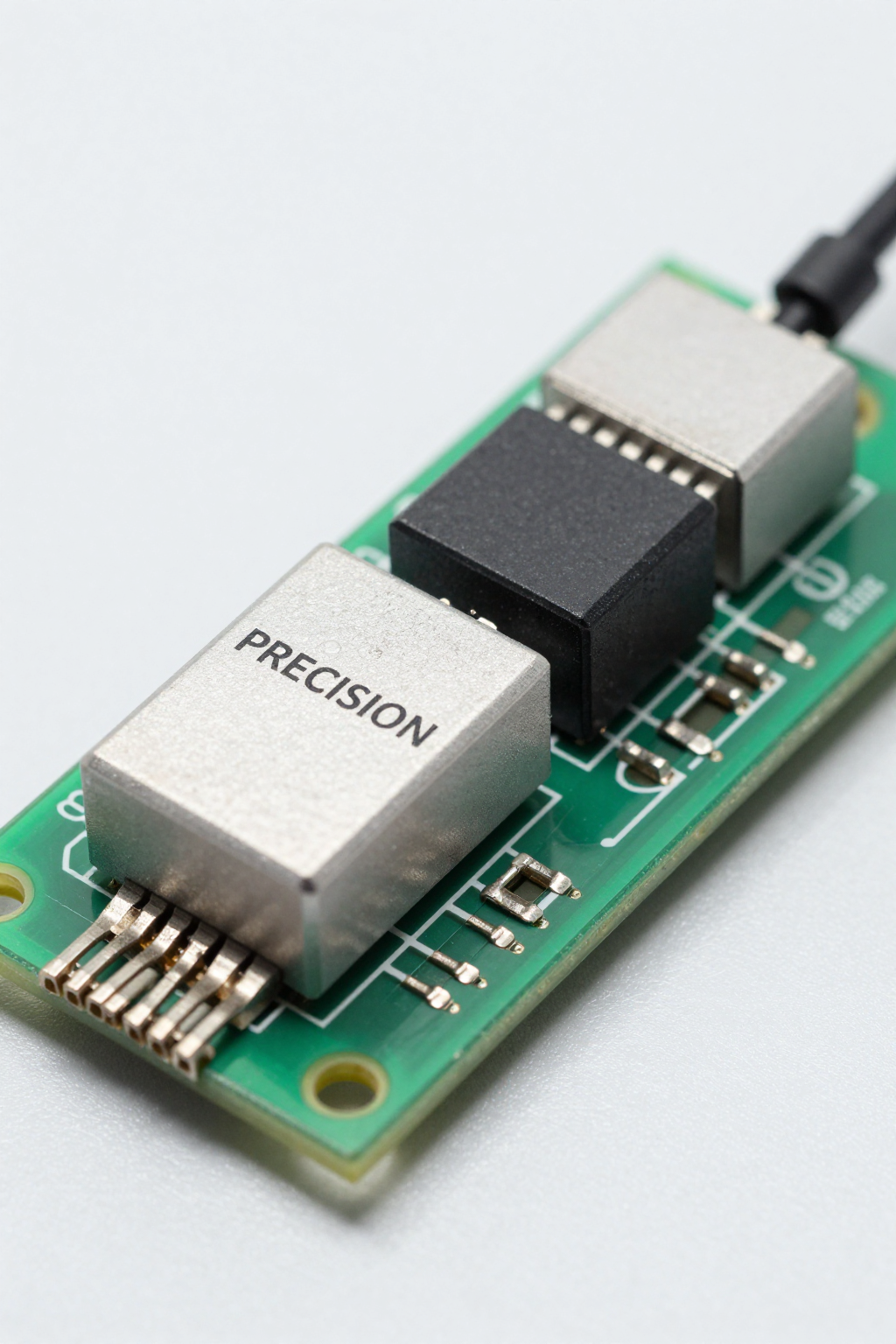
1.1 Core features summary
Point: The MAX74821ARMZ-R7 is a dual-channel, rail-to-rail amplifier targeting precision front-ends. Evidence: Key specs include rail-to-rail input/output behavior, low offset, low quiescent current, and MHz-range gain-bandwidth. Explanation: For designers this means the device is appropriate where small-signal fidelity and modest bandwidth are required—common in bridge sensors, thermocouples, and ADC drivers that demand low error and low power.
1.2 Package, operating range, and ordering identifiers
Point: The device is delivered in a compact MSOP-style package with a multi-pin footprint suited to space-constrained boards. Evidence: The datasheet lists typical pin count and a wide operating temperature window plus a typical single-supply voltage window spanning a few volts. Explanation: Package and thermal range influence PCB routing, thermal derating, and whether the part can be placed close to the sensor or ADC for optimal noise performance.
2 — Key Analog Electrical Specs: Inputs, Outputs, and Precision (Data analysis)
2.1 Input characteristics: offset, bias current, input range
Point: Input offset and bias currents set the floor for absolute accuracy. Evidence: The datasheet reports sub-millivolt input offset and extremely low input bias current suitable for high-impedance sensors. Explanation: In practice, a few hundred microvolts of offset can consume multiple ADC LSBs at high gain; ultra-low bias current prevents measurement shift when used with megohm-level source impedances.
2.2 Output & drive: output swing, output current, load driving
Point: Output swing relative to rails and short-circuit or load current determine usable dynamic range into a given load. Evidence: The datasheet specifies rail-proximate output swing and modest output drive per channel. Explanation: Driving low-impedance loads or long traces may require a buffer or follower stage; if the load is >10kΩ the amplifier can typically maintain linearity, while heavier loads will degrade accuracy and settling.
3 — Frequency & Dynamic Performance: Bandwidth, Slew Rate, Noise (Data analysis)
3.1 Bandwidth, gain-bandwidth product, and slew rate
Point: Gain-bandwidth product (GBW) and slew rate translate into closed-loop bandwidth and transient settling. Evidence: The device offers MHz-class GBW and a multi-volt-per-microsecond slew rate per the specs. Explanation: Use the rule-of-thumb closed-loop BW ≈ GBW / closed-loop gain to estimate usable bandwidth; note that slew-limited response affects large-step settling even when small-signal BW is adequate.
3.2 Noise, drift, and stability implications
Point: Input-referred noise density and drift define measurement noise floor and long-term stability. Evidence: The datasheet provides noise density and offset drift figures across temperature. Explanation: For low-frequency or DC measurements, integrate noise over bandwidth to estimate RMS error; high drift or 1/f noise may mandate filtering or chopper/auto-zero architectures in the signal chain.
4 — Power & Thermal Metrics: Supply Current, Voltage Limits, and Temperature (Method/guide)
4.1 Supply requirements and power consumption
Point: Supply voltage range and quiescent current determine battery life and system power budget. Evidence: The specs indicate operation from a few volts and low microamp-to-milliamp quiescent current per channel. Explanation: Designers should translate quiescent current into battery life (I_q × supply voltage × duty factors) and consider power-savings techniques such as duty-cycling or shutdown between measurements.
4.2 Thermal limits, derating, and reliability considerations
Point: Junction/ambient temperature limits and power dissipation set placement and derating practices. Evidence: The datasheet lists maximum ambient/junction temperatures and thermal resistance for the package. Explanation: Calculate worst-case power (Vdrop × Iout) and ensure PCB copper and placement provide sufficient heat spreading to avoid thermal throttling or reliability loss.
5 — Where it Works Best: Application Examples & Fitment (Case study)
5.1 Precision sensor front-ends and ADC drivers
Point: The amplifier is well-suited to low-level sensor conditioning ahead of ADCs. Evidence: Specs emphasizing low offset, rail-to-rail I/O, and MHz-class bandwidth match typical ADC front-end requirements. Explanation: For bridge or thermocouple front-ends, set moderate gains to stay within closed-loop BW while preserving offset headroom; use input filters to limit ADC aliasing and reduce broadband noise.
5.2 Low-power buffering and general-purpose analog tasks
Point: The device is also a fit for low-power buffering, level shifting, and simple filtering. Evidence: With low supply current and rail-to-rail operation the specs support battery-powered nodes. Explanation: For heavy drive or precision filtering, consider a higher-output-current or lower-noise family; otherwise the part offers a strong balance for many general analog tasks.
6 — Practical Design & Test Checklist (Action suggestions)
6.1 PCB layout, decoupling, and protection best practices
Point: Layout and decoupling materially affect realized noise and stability. Evidence: The datasheet recommends bypass capacitor values and placement near the supply pins. Explanation: Place a 0.1µF ceramic across the supply pins, add a 1µF bulk capacitor nearby, use short return paths, and consider guard traces for ultra-low bias paths; input protection diodes or series resistors protect against ESD and large transients.
6.2 Bench tests to validate key datasheet claims
Point: Simple bench tests confirm offset, bias current, noise, bandwidth, and quiescent current. Evidence: The datasheet provides test conditions and typical/maximum figures to reproduce. Explanation: Use a low-noise source and precision ADC to measure offset; a picoammeter for bias current; spectrum analysis or an FFT for noise density; and a step-response with an oscilloscope to validate closed-loop settling and slew-rate behavior.
Summary
Point: The MAX74821ARMZ-R7 offers a practical balance of precision, rail-to-rail I/O, low power, and MHz-range dynamics for sensor front-ends and ADC drivers. Evidence: Datasheet headline metrics emphasize sub-millivolt offset, low quiescent current, and MHz-class GBW. Explanation: Use this part where moderate bandwidth and high input fidelity are needed with constrained power budgets; always cross-check the datasheet when finalizing component choices.
SEO & writing checklist (append as short bullet list for the author)
- Primary keyword plan: include "MAX74821ARMZ-R7" exactly three times (H1, H3 1.1 opening line, Summary opening).
- Scatter "datasheet" and "specs" across technical sections (inputs, frequency, tests).
- Suggested long-tails to weave naturally: "input offset specs", "bandwidth slew rate", "rail-to-rail amplifier datasheet summary".
- Meta description (one line): Quick datasheet-driven breakdown of MAX74821ARMZ-R7 specs — input/output performance, bandwidth, power, and practical design checklist for system engineers.
- Internal anchors to add later: "datasheet full PDF" and "application note".